Infographic · July 2026
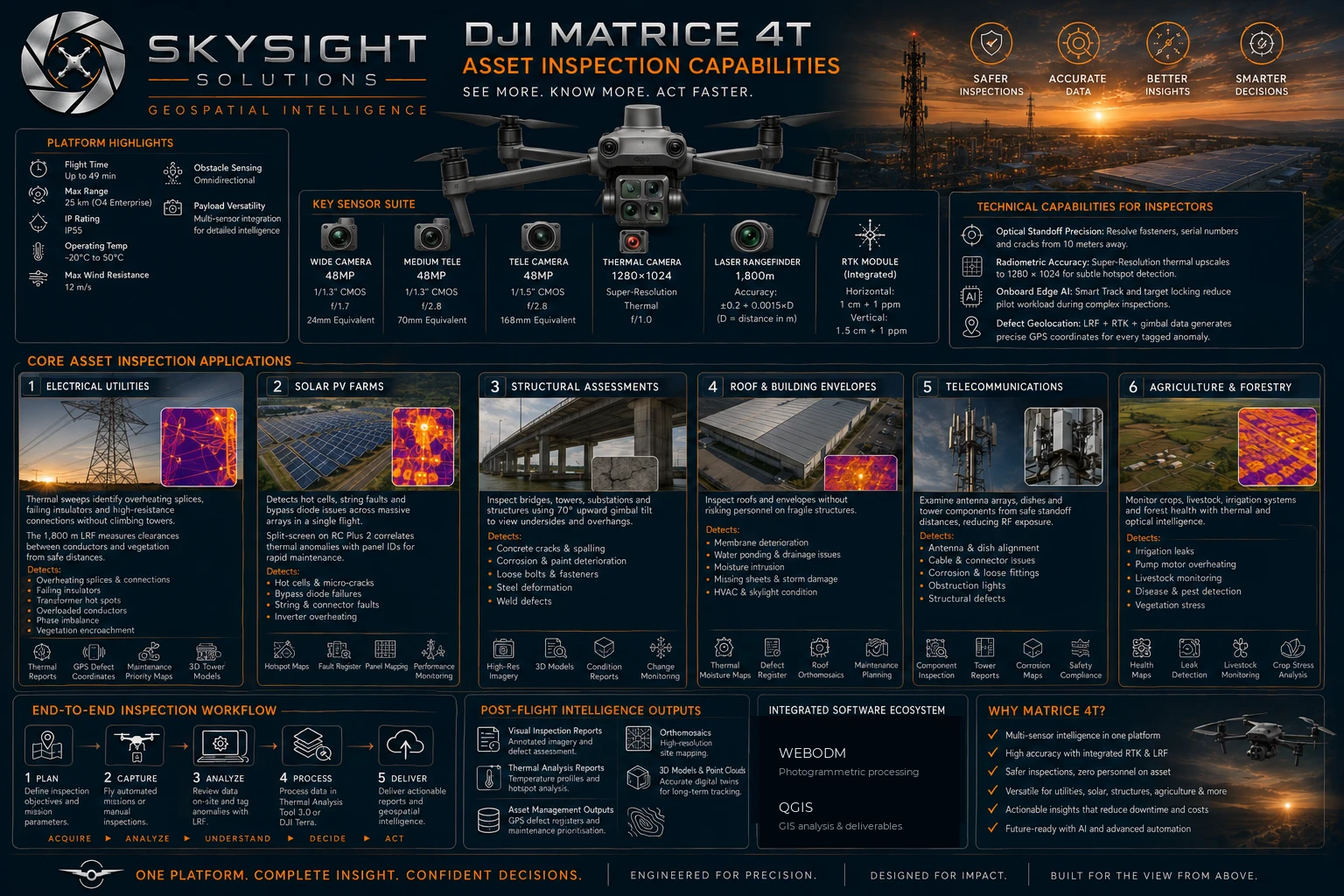
Six inspection applications, from electrical utilities and solar PV to structural assessment and telecommunications — what each one detects, and the reports it produces.
 View full size
Detailed infographic — tap or click the image to open it full size for reading.
The case for aerial inspection is not that it is cheaper. It is that nobody has to climb anything, and the inspection finds faults that a ground survey cannot.
Thermal sweeps identify overheating splices, failing insulators and high-resistance connections on transmission lines without a technician leaving the ground. On solar arrays, the same approach locates hot cells, bypass diode failures and string faults across an installation far faster than a panel-by-panel check.
For structures, a 70° upward gimbal tilt allows inspection of undersides and overhangs — bridge soffits, canopies, tower components — capturing concrete cracks, corrosion, loose fasteners and weld defects at resolution.
On roofs and building envelopes, thermal imaging reveals moisture intrusion and water ponding that is invisible from above in ordinary light, alongside membrane deterioration and storm damage.
Every anomaly found is geolocated. The laser rangefinder, RTK module and gimbal data together produce precise GPS coordinates for each tagged defect, so a maintenance team can go straight to it rather than searching.
Want this applied to your own property, site or asset?
Book a Consult